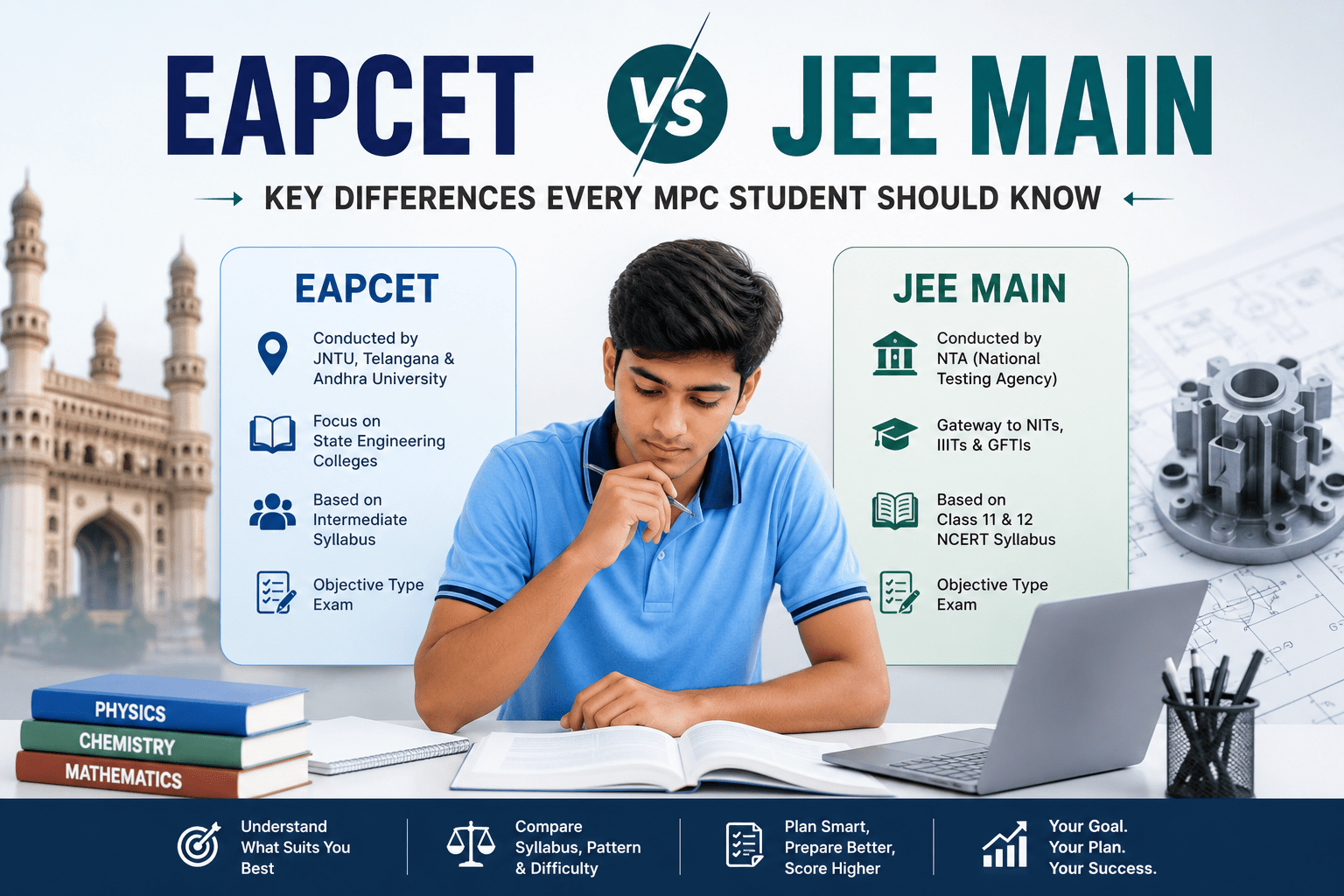
Choosing the right stream after 10th is one of the most important decisions in a student’s academic journey. For students stepping into intermediate education, the two most popular options are MPC (Maths, Physics, Chemistry) and BiPC (Biology, Physics, Chemistry). Each stream opens doors to different career paths, so understanding your interests, strengths, and long-term goals is essential before making a choice.
Understanding MPC (Maths, Physics, Chemistry)
MPC is the ideal stream for students who enjoy mathematics, logical reasoning, and problem-solving. This stream lays a strong foundation for careers in engineering, technology, and analytical fields.
Career opportunities after MPC include:
- Engineering (via JEE and other entrance exams)
- Computer Science & IT
- Data Science & Artificial Intelligence
- Architecture
- Defence services
Students who are comfortable with numbers, formulas, and analytical thinking will thrive in MPC. It requires consistent practice, especially in mathematics and physics, but offers vast career opportunities in rapidly growing industries.
Understanding BiPC (Biology, Physics, Chemistry)
BiPC is best suited for students who are passionate about biology, healthcare, and life sciences. It focuses more on theoretical understanding, especially in biology, along with conceptual knowledge of physics and chemistry.
Career opportunities after BiPC include:
- Medicine (MBBS, BDS via NEET)
- Pharmacy
- Biotechnology
- Nursing & Allied Health Sciences
- Agriculture & Life Sciences
If you are interested in human anatomy, healthcare, and research, BiPC can be the right path. It requires strong memory skills, conceptual clarity, and dedication, especially for competitive exams like NEET.
Key Differences Between MPC and BiPC
- Core Focus:
MPC emphasizes mathematics and problem-solving, while BiPC focuses on biology and theoretical concepts. - Career Direction:
MPC leads to engineering and technology fields, whereas BiPC leads to medical and life science careers. - Skill Requirements:
MPC requires analytical and numerical skills; BiPC requires observation, memory, and conceptual understanding. - Competitive Exams:
MPC students typically prepare for JEE and other engineering entrances, while BiPC students aim for NEET and medical-related exams.
How to Choose the Right Stream?
Making the right choice depends on a few key factors:
- Interest:
Ask yourself what subjects you genuinely enjoy. Do you like solving math problems or learning about living organisms? - Strengths:
Evaluate your performance in 9th and 10th. Strong in math? MPC might suit you. Good at biology? BiPC could be your path. - Career Goals:
If you dream of becoming an engineer or working in technology, MPC is the way to go. If you aspire to be a doctor or work in healthcare, choose BiPC. - Future Flexibility:
MPC generally offers more flexibility in switching career paths later, while BiPC is more specialized toward medical and life sciences.
The Role of Integrated Coaching
Whichever stream you choose, opting for integrated coaching can significantly improve your chances of success. Programs that combine intermediate education with JEE or NEET preparation help you stay focused, save time, and build strong concepts from the beginning.
Conclusion
There is no “better” stream between MPC and BiPC—only the one that’s right for you. Your choice should align with your passion, strengths, and long-term vision. Take time to evaluate your interests, seek guidance from mentors, and make an informed decision.
Remember, success doesn’t depend on the stream you choose, but on how dedicated and consistent you are in pursuing your goals.