How to Score 90%+ in Intermediate Board Exams While Preparing for JEE / NEET

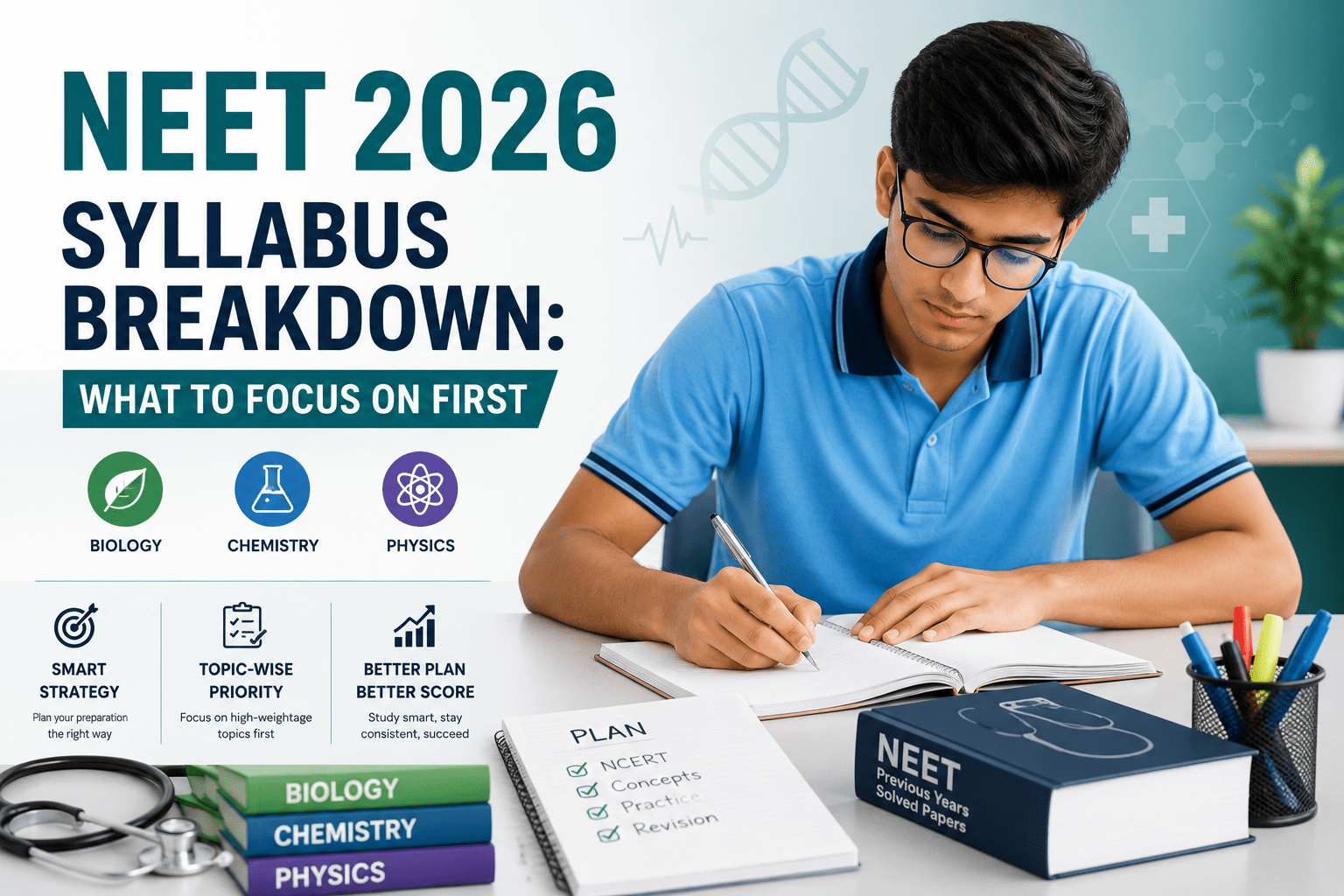
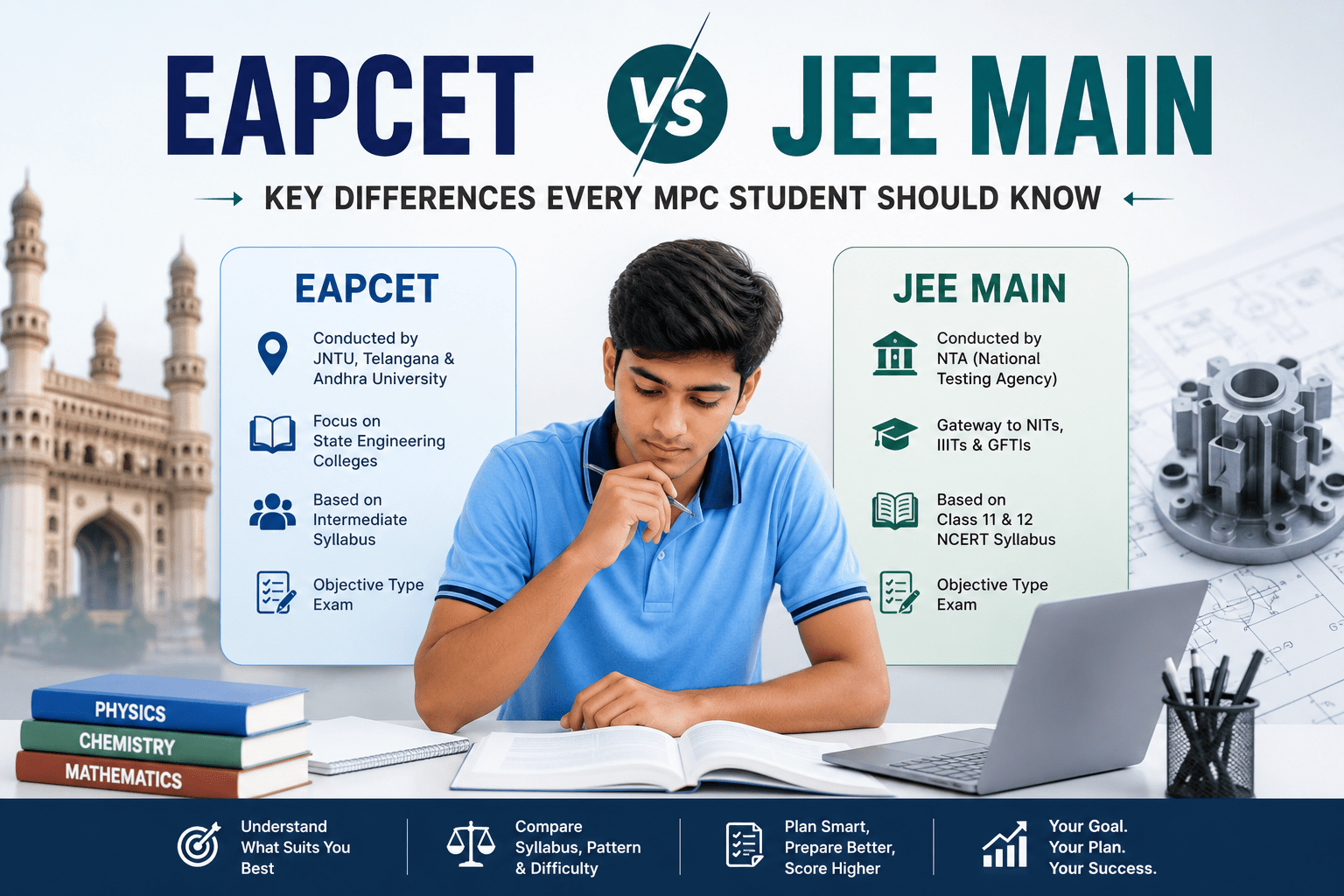
Every year, thousands of students across Hyderabad and Telangana face the same daunting challenge — excelling in Intermediate board exams while simultaneously preparing for JEE or NEET. Most assume it’s a trade-off. At Apeksha Junior College, we believe — and prove — that it isn’t. With the right strategy, you can nail both. 90%+BOARD SCORE TARGET 70%SYLLABUS OVERLAP (JEE/BOARD) 2 YearsTO MASTER BOTH 01. Understand the Overlap — Stop Studying Twice The single biggest mistake students make is treating board preparation and JEE/NEET preparation as completely separate journeys. They are not. Over 70% of the JEE Main and NEET syllabus is directly aligned with the Intermediate MPC/BiPC curriculum. If you deeply understand Physics, Chemistry, Mathematics (or Biology), you’re simultaneously building your board foundation and competitive exam readiness. The key is to study concepts deeply rather than shallowly memorising two different sets of notes. Subject Overlap Matrix [Common] Physics→ Mechanics & Laws of Motion→ Electrostatics & Current→ Waves & Optics→ Modern Physics [Common] Chemistry→ Atomic Structure & Bonding→ Thermodynamics→ Organic Reactions→ Equilibrium [JEE] Mathematics→ Calculus & Integration→ Coordinate Geometry→ Algebra & Sequences→ Probability [NEET] Biology→ Cell Biology & Genetics→ Human Physiology→ Plant Physiology→ Ecology & Evolution 02. Build a Realistic, Integrated Daily Schedule Time management is the backbone of dual preparation. Here’s a sample daily routine that Apeksha students follow — designed to cover both board and competitive exam needs without burning out. TIME ACTIVITY FOCUS 5:30 – 7:00 AM Self-study (Difficult topics) JEE/NEET 7:00 – 8:00 AM Morning revision & formula recall Board 8:30 AM – 2:30 PM College classes (integrated) JEE/NEET + Board 3:00 – 4:00 PM Rest / Light reading Recovery 4:00 – 6:00 PM Problem-solving practice JEE/NEET 6:00 – 8:00 PM Board-specific writing practice Board 8:30 – 9:30 PM Daily test / MCQ review JEE/NEET 9:30 – 10:00 PM Plan next day & wind down Routine Note: Adjust this to suit your natural rhythm. Night owls can shift blocks later. What matters is consistency — not the exact timing. 03. Master the Art of Answering Board Questions Board examiners reward presentation, structure, and clarity — not just correct answers. JEE/NEET-focused students often under-score in boards because they write fragmented, point-form answers where evaluators expect well-developed paragraphs with diagrams and derivations. 04. Prioritise Topics Strategically — Use the 80/20 Rule You cannot give equal time to every topic. The Pareto Principle applies here: roughly 20% of topics account for 80% of marks in both boards and competitive exams. Identify these high-yield areas and invest disproportionately in them. “Boards test breadth; competitive exams test depth. Your goal is to go deep on shared topics and cover board-exclusive topics efficiently in the last 60 days.”— Academic Strategy, Apeksha Jr. College 05. Dos and Don’ts of Dual Preparation DO THIS Maintain a single, unified notebook per subject Revise board chapters every weekend Take at least one full board mock monthly Sleep 7-8 hours — memory consolidation depends on it Discuss doubts with teachers the same day Track weak topics in a dedicated log AVOID THIS Ignore boards until 3 months before exams Maintain separate notes for board and JEE/NEET Skip college tests because they don’t count Study 14+ hours — quality beats quantity Neglect English/Telugu language papers Compare your progress with peers daily 06. Leverage Mock Tests and Performance Analytics What gets measured gets improved. Regular mock tests — both board-pattern and MCQ-based — give you two critical advantages: they reveal your weak zones before the actual exam, and they train you to perform under timed, exam-like pressure. 07. Mentorship Makes the Difference Information is abundant. Personalised guidance is rare. The difference between a student who scores 75% and one who scores 90%+ often isn’t intelligence — it’s the quality of mentorship they receive. At Apeksha Junior College, every student gets regular one-on-one mentoring sessions, personalised academic plans, and access to faculty who understand both the TS/AP Intermediate board pattern and the intricacies of JEE and NEET. This is our integrated model — and it works. “Education at Apeksha goes beyond marks. We prepare students for clarity, confidence, and a clear path to success — whether it’s an IIT, NEET rank, or EAPCET score.”— Mahadev Mundey, Founder & Director, Apeksha Jr. College Ready to Score 90%+ While Acing JEE or NEET?Join Apeksha Junior College’s integrated MPC + JEE or BiPC + NEET programme in Hyderabad.Book a Free Counselling Session → apekshaedu.in/contact 08. Final Takeaway: Dual Success Is Not a Myth Scoring 90%+ in Intermediate board exams while clearing JEE or NEET is not about working harder — it’s about working smarter. Align your preparation, master the overlap, practise board-style writing, and seek mentored guidance. The students who excel at both are not superhuman. They are focused, consistent, and — more often than not — guided by an institution that understands how to bridge academic and competitive success. At Apeksha Junior College, Kompally, Hyderabad, that is exactly what we do — every single day.
Top 10 Study Strategies to Excel in Intermediate Board Exams & Entrance Tests

Preparing for intermediate board exams along with competitive entrance tests like JEE and NEET can feel overwhelming. However, with the right strategies, students can manage both effectively and achieve outstanding results. Success is not just about studying harder—it’s about studying smarter. Here are the top 10 study strategies to help you excel in both board exams and entrance tests. 1. Understand the Syllabus Clearly Start by thoroughly understanding the board syllabus and the entrance exam pattern. Identify common topics and prioritize them. This helps you avoid unnecessary study and focus on what truly matters. 2. Create a Realistic Study Plan A well-structured timetable is essential. Divide your day into dedicated slots for board preparation, entrance exam practice, and revision. Make sure your plan is practical and includes short breaks to avoid burnout. 3. Focus on Conceptual Clarity Whether it’s Physics, Chemistry, Mathematics, or Biology, strong concepts are the foundation of success. Avoid rote learning—focus on understanding “why” and “how” behind every concept. This is especially important for entrance exams. 4. Practice Regularly Consistent practice is key, particularly for problem-solving subjects like Maths and Physics. Solve a variety of questions, including previous years’ papers and mock tests, to improve speed and accuracy. 5. Make Short Notes Prepare concise notes for formulas, key concepts, and important points. These notes are extremely useful during revision and help in quick recall before exams. 6. Revise Frequently Revision is just as important as learning new topics. Allocate time every week to revisit previously studied chapters. This strengthens memory and reduces last-minute stress. 7. Take Mock Tests Seriously Mock tests simulate the real exam environment and help you assess your preparation level. Analyze your performance after each test to identify weak areas and work on them. 8. Manage Time Effectively Time management plays a crucial role during both preparation and exams. Practice solving questions within a time limit to improve efficiency and ensure you can complete the paper on time. 9. Maintain a Healthy Routine A healthy body supports a sharp mind. Get enough sleep, eat nutritious food, and include some physical activity in your daily routine. Avoid excessive screen time and distractions. 10. Stay Consistent and Positive Consistency is the secret to success. Even small daily efforts lead to big results over time. Stay motivated, believe in yourself, and don’t get discouraged by temporary setbacks. Final Thoughts Balancing intermediate board exams and entrance test preparation may seem challenging, but with proper planning and discipline, it is completely achievable. By following these strategies, students can build confidence, reduce stress, and perform at their best. Remember, success is not about last-minute preparation—it’s about consistent effort, smart strategies, and a positive mindset. Stay focused on your goals, and you’ll be well on your way to excelling in both your board exams and competitive entrance tests.